- Navy Service: “The Old Bones” (2935–2954)
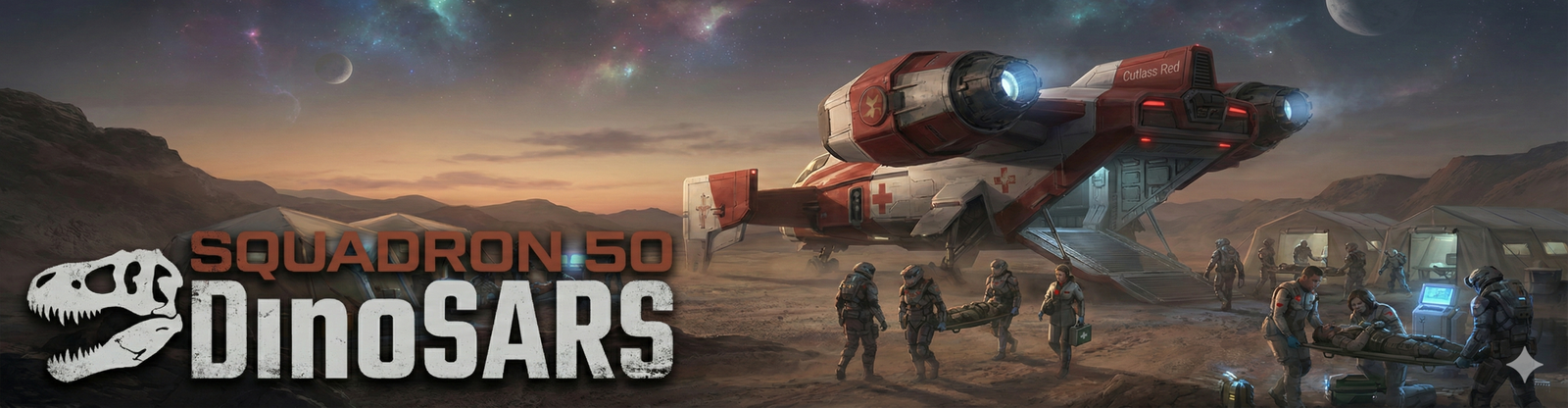
Squadron 50 was never a glorious combat unit; they were the cleanup crew. While the fighter jocks were busy racking up kills, the “DinoSARS” were flying into debris fields, radiation storms, and burning atmosphere layers to pull ejected pilots out of the void.
They earned the nickname “DinoSARS” (a play on Dinosaur Search And Rescue Squadron) because of their stubborn refusal to rely on modern “Auto-Triage” algorithms. While new Navy protocols dictated that rescue priority should be calculated by AI based on survival probability, Squadron 50 pilots ignored the math. If a beacon was active, they went in—even if the odds were 1%.
The “Fossil” Fleet: They operated the RSI Apollo, a sturdy, reliable medical ship that had been in service for decades. The squadron mechanics kept these aging ships flying long past their service life, using scavenged parts and “percussive maintenance.” They prided themselves on being “too tough to die.”
- The “Automed Initiative” & Deactivation (2954)
The squadron’s demise was caused by the UEE’s shift toward efficiency over heroism.
In 2954, the Navy Bureau of Medicine rolled out the “Automed Initiative.” The logic was cold and financial: Dedicated SAR frigates like the Apollo were too expensive to risk in frontline combat.
- The Shift: The Navy decided to replace independent SAR squadrons with unmanned recovery drones and embedded medical bays inside capital ships. The rationale was that a drone is expendable; a trained medical crew is not.
- The Deactivation: Squadron 50 was disbanded. The Admiralty cited their “antiquated risk assessment protocols” (i.e., their tendency to risk the ship to save one pilot) as a liability. Their beloved Apollos were stripped of their military transponders and sent to the scrapyards of the Kilian system.
III. The Transfer to CSG-3 (Early 2955)
Retired Rear Admiral Glenn “Pappy” Wade had been pulled out of a burning cockpit by Squadron 50 twenty years ago. He hadn’t forgotten.
When he heard the “DinoSARS” were being put out to pasture, he intervened.
- The Acquisition: Wade bought the squadron’s decommissioned RSI Apollo hulls for scrap value. They were gutted shells—no sensors, no medical tech.
- The “Frankenstein” Refit: Wade didn’t have access to military medical supplies, so he improvised. He outfitted the Apollos with Drake-manufactured tractor beams (cheaper and stronger than RSI stock) and civilian “MedBed” technology sourced from Crusader Industries.
- The Recruitment: Wade tracked down the squadron’s commander, Major “Bones” McCoy (a nickname earned because he broke so many of them). Wade’s pitch was simple: “The Navy wants drones. I want people who actually give a damn. You’re hired.”
- Current Status: December 2955
As of today, Squadron 50 serves as the Medical & Recovery wing of Carrier Strike Group 3.
- Tactical Role:
- The “Ambulance Chasers”: When the Wildcards or Tiger Sharks are dogfighting, the DinoSARS are hovering just outside the engagement zone. If a pilot ejects, an Anvil C8R Pisces (deployed from the Apollo’s hangar bay) is there to scoop them up within seconds.
- Field Hospital: Their RSI Apollos serve as mobile clinics for the fleet, treating everything from combat wounds to engine burns, keeping CSG-3 independent of planetary hospitals.
- Philosophy: They are the morale backbone of the fleet. Every pilot in CSG-3 flies a little harder knowing that if they get shot down, the “Dinos” will fly through hell to get them back.
.